

Staffing a park is rarely as predictable as the schedule suggests. Guest demand shifts throughout the day, often in ways that are difficult to anticipate. A restaurant that normally sees its lunch rush at noon might suddenly get busy at 11:30, while a ride that rarely develops a significant queue could see demand spike after another attraction temporarily closes. Even areas that were quiet all morning can become some of the busiest parts of the park by afternoon.
That makes effective staffing about more than knowing how many guests are expected through the gates. Operators need to understand how those guests are moving through the property, where demand is building, and how those patterns change throughout the day. With better visibility into what’s actually happening across the park, teams can make more informed decisions about where and when their people are needed most.
Historical Data Gives You a Starting Point
Staffing has traditionally relied heavily on forecasts and historical patterns, and for good reason. Previous attendance, day of the week, seasonality, weather, special events, and past demand can all help operators anticipate how many employees they may need and where they are likely to need them. If Saturdays in July consistently bring a lunchtime rush to a particular restaurant, operators can plan for it. If attendance typically peaks around a holiday weekend, schedules can be adjusted in advance. Over time, these patterns create a valuable baseline for building smarter staffing plans.
But historical data can only tell you what usually happens. It can’t tell you exactly what is happening in your park today. Two Saturdays with similar attendance can unfold very differently. Weather can change unexpectedly, a popular attraction can temporarily close, a large group can arrive earlier than anticipated, or guests behave differently than previous patterns suggested. That’s where the next generation of operational data becomes important.
From Planning the Day to Managing It Live
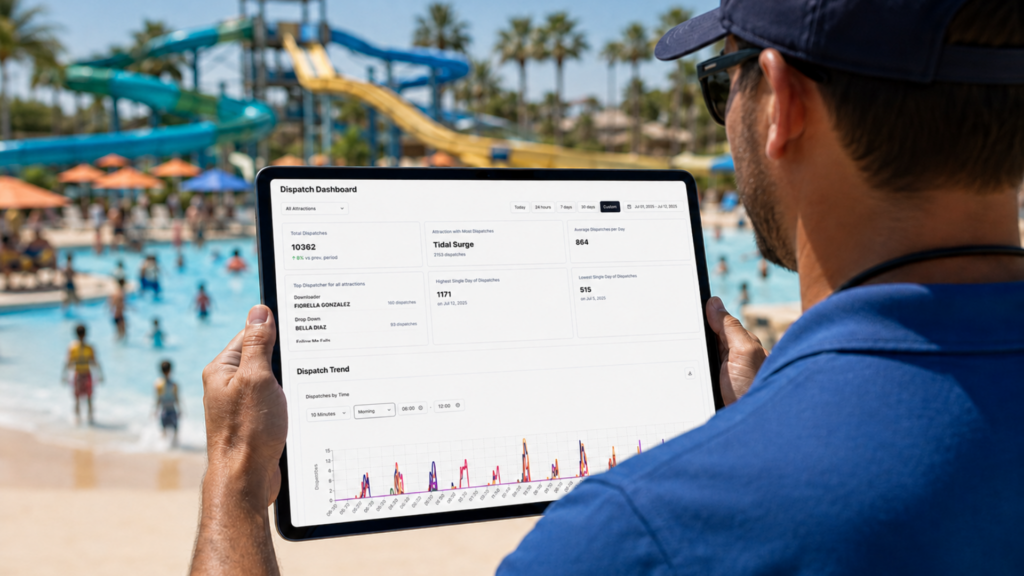
Technology has changed how much operators can understand about their venue while the day is still unfolding. Instead of relying on historical patterns and reviewing performance after the fact, teams can now see attendance, guest movement, queues, attraction activity, and transactions in real time, giving them a clearer picture of where demand is actually building.
That visibility matters because even a well-planned day can unfold differently than expected. Overall attendance might match the forecast while guests concentrate in an unexpected area or demand peaks earlier than usual. The staffing plan wasn’t necessarily wrong; the conditions just changed.
Live data helps operators recognize those shifts sooner and understand what they mean for the operation. Rather than reacting to every fluctuation, teams can identify where pressure is developing, determine whether additional support is needed, and make informed adjustments while guests are still in the park.
Visibility Matters for More Than Efficiency
Better staffing can mean shorter queues and faster service, but its importance extends beyond efficiency. Attractions are dynamic environments where thousands of guests can be moving through the property at any given time, and having the right people in the right places is an important part of keeping that environment safe. If guest traffic begins concentrating in one area, for example, crowding can quickly become not just an inconvenience but a danger. Knowing that pressure is building gives operators the opportunity to deploy additional staff, manage guest flow, and respond before the situation becomes more difficult to control.
Historical data can help teams anticipate where these situations are likely to occur, while live data helps them recognize when conditions are actually changing.
Technology doesn’t replace experienced operators or established safety procedures, but it can give teams another layer of visibility to make informed decisions when it matters most.
See the Park as It Is, Not Just as You Planned It
Attendance forecasts and historical trends remain an important foundation for staffing, while live data adds the visibility to understand when conditions are changing and where additional support may be needed. No staffing plan can predict exactly how every day will unfold, so having the ability to recognize when reality differs from the plan can help teams respond while there is still time to make an impact.
Vantage brings those historical and real-time insights together, giving operators a clearer view of what is happening across their venue so they can make more informed staffing decisions that support efficient operations and a better, safer experience for guests.

