

The attractions industry isn’t changing because guests suddenly expect more from parks; it’s changing because every great digital experience sets expectations for the next one. Guests check into hotels using their phone, mobile order coffee on their way to work, receive personalized recommendations from streaming services, and pay with a digital wallet almost without thinking. By the time they arrive at a theme park, zoo, aquarium, resort, or family entertainment center, those expectations translate over. For operators, that creates both a challenge and an opportunity.
During ACOLAP 2026 in Colombia, Vantage Vice President of Global Business Development Dana Barnett explored five global trends reshaping guest expectations and what they mean for attractions around the world. While each trend reflects a different shift in guest expectations, together they point to one clear reality: connected guest journeys will define the next generation of attractions.
1. Frictionless Is Expected
Whether it’s carrying multiple tickets, missing out on a nearby experience because guests didn’t know it was available, waiting longer than expected for food, or struggling to find family members in a busy park, small moments of friction quickly add up throughout the day. Individually these inconveniences may seem small, but together they shape how visitors experience the venue, and influence if they want to come back.
The moments between attractions matter just as much as the attractions themselves. Waiting to pay for lunch, searching for a locker, digging to find your family’s tickets throughout the day, or visiting guest services to resolve a simple issue all interrupt the flow of the experience. In many attractions, those moments exist because the technology supporting them operates independently. For today’s guests, a seamless experience is the expectation. The attractions that stand out won’t necessarily be those with the newest technology, but those that remove friction by making every interaction feel like part of one connected journey.
2. AI Is Only as Smart as the Data Behind It
Artificial intelligence has quickly become one of the industry’s biggest talking points. Operators are exploring AI to forecast attendance, optimize staffing, predict demand, analyze guest sentiment, personalize marketing, and support operational decision-making in ways that weren’t possible just a few years ago. But AI has one significant limitation: it can only work with the information it’s given.
If guest data is scattered across disconnected platforms, AI can only analyze fragments of the guest journey rather than the complete picture. A recommendation engine may understand purchasing behavior but know nothing about ride preferences. Operational dashboards may identify congestion but have no visibility into guest demographics or spending habits. The operators gaining the greatest advantage from AI aren’t necessarily those investing in the most sophisticated models; they’re investing in connected data that gives AI the context needed to produce actionable insights.
3. Personalization Beyond Hi (Name)
Personalization has shifted from being a nice-to-have to an expected part of the guest experience. Guests increasingly expect attractions to recognize who they are, understand what they enjoy, and make their day feel easier without having to ask.
Imagine a family with annual passes returning to your park. Their membership is already linked to their account; birthday rewards appear automatically, the mobile app recommends experiences they haven’t tried before, and a timely notification highlights a nearby attraction with a short wait time. None of these moments are revolutionary on their own, but together they create a visit that feels special and made just for them.
Delivering that level of personalization isn’t just about sending the right message at the right time; it’s about understanding the guest and creating a tailored offering to them before, during, and after their visit. Without that foundation, personalization becomes little more than broad marketing. With it, attractions can create experiences that feel relevant to every guest.
4. Loyalty Is Becoming Engagement
Loyalty is evolving too. For years, many loyalty programs focused on collecting points that guests redeemed weeks or months later. While those programs still have value, leading operators are beginning to rethink what loyalty should accomplish during the visit itself.
Instead of rewarding transactions alone, attractions are increasingly rewarding behaviors. Guests might earn rewards for visiting quieter attractions, completing challenges with family members, exploring different areas of the park, or discovering premium experiences they may otherwise have overlooked. This shift transforms loyalty from a passive rewards program into an active part of the guest experience. Gamification, personalized challenges, and real-time rewards encourage guests to engage more deeply with the venue while helping operators improve guest distribution, increase participation in premium offerings, and create stronger emotional connections that extend well beyond a single visit.
5. Unified Data Is Becoming Every Operator’s Competitive Advantage
Every attraction generates thousands of guest interactions each day, but the value lies in understanding how those interactions connect. A ticket purchase, locker rental, food order, ride photo, and loyalty reward may all be captured by different systems, each providing a small piece of the guest journey. When that information is brought together, operators gain a much richer understanding of how guests move through the venue, what influences their behaviour, and where opportunities exist to improve the experience.
That’s why unified data is becoming one of the industry’s greatest competitive advantages. Rather than relying on isolated reports from individual systems, operators can make decisions based on a complete picture of the guest journey, helping them deliver more personalized experiences, optimize operations, and unlock greater value from every visit.
What Does This Look Like in Practice?
Enchanted Parks is a good example of how many attractions are approaching this challenge. Following the acquisition of eight parks, the operator needed a way to bring together ticketing, payments, food and beverage, access control, and guest engagement across its portfolio. Rather than replacing proven systems, it connected them through Vantage, allowing each park to continue using the solutions that best suited its operation while creating a more connected experience for guests and operators alike.
For guests, the difference is immediate. A family books online and automatically receives one connected guest account. When they arrive, a wristband, QR code, or mobile app becomes their credential for admissions, payments, loyalty, and experiences throughout the day. Parents can apply spending limits to children’s wristbands; personalized offers are delivered at relevant moments, and gamified challenges encourage families to explore attractions they may otherwise have missed. The technology quietly supports the experience without demanding the guest’s attention.
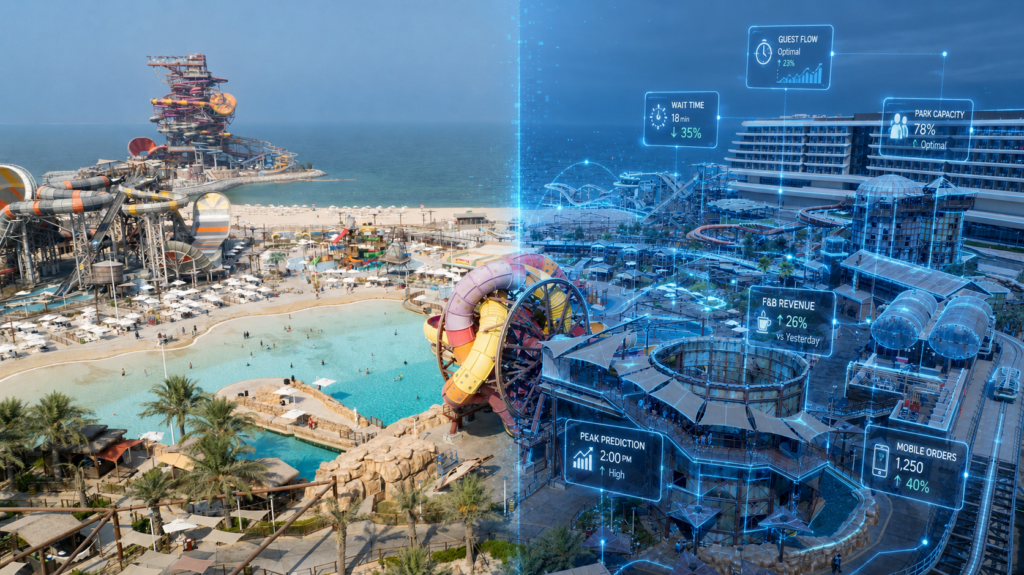
Behind the scenes, operators gain something equally valuable. Instead of piecing together reports from multiple vendors, teams have a complete view of how guests move throughout the venue, what they purchase, which attractions they visit, and how operational decisions influence the overall experience. That visibility makes it easier to identify revenue opportunities, optimize staffing, improve guest flow, and make more informed decisions based on real guest behavior rather than isolated data sets.
The Future Isn’t About More Technology
Most attractions already have many of the tools they need. They have invested in ticketing platforms, payment systems, loyalty programs, mobile applications, and operational software. The challenge is no longer adding another platform or replacing every existing investment; it’s creating the connective layer that allows those technologies to work together as one.
As guest expectations continue to evolve, the attractions that stand out won’t be those with the newest technology; they’ll be the ones that create experiences where technology connects touchpoints and gives operators the insight to continuously improve both the guest experience and the performance of their business.

